Motivation of the project
It is not uncommon to find old Firewire audio interfaces being sold on various marketplaces at very low prices. Many of them are high-quality pieces of hardware that originally had a much higher market value, but are now much more affordable because getting them to work with modern computers is no longer straightforward.
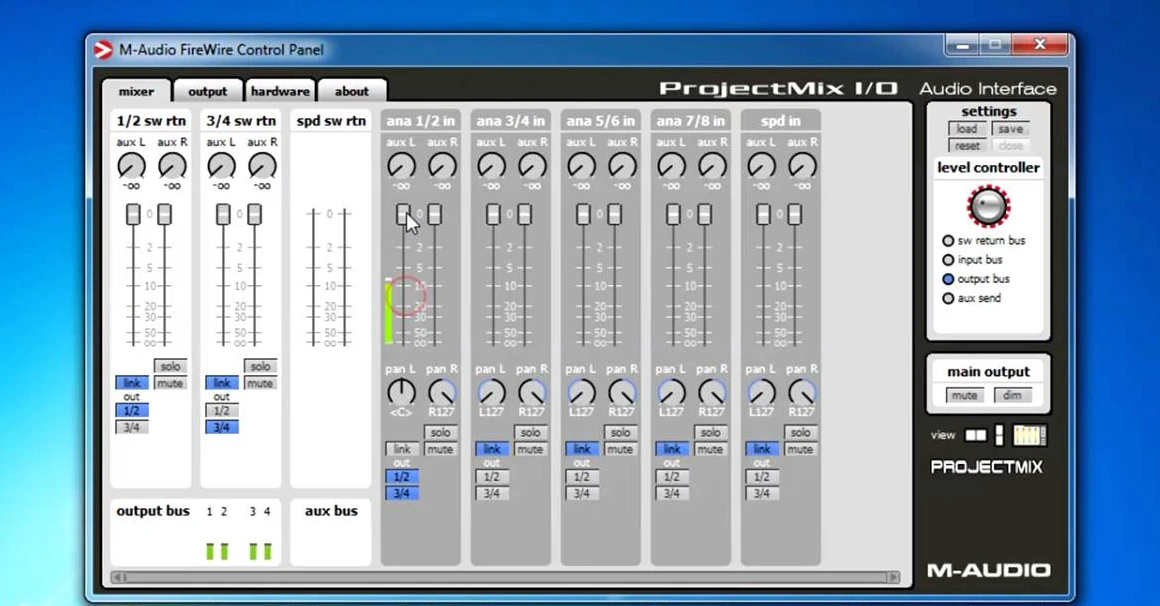
Many interfaces depend on drivers that were developed for Windows XP, older versions of macOS, or other operating systems that are no longer supported. Using them may therefore require installing an outdated operating system or a dedicated computer. On top of that, very few modern laptops include a Firewire port. Depending on the interface and computer, using one may require a desktop PC with a compatible PCI Firewire card, or a laptop equipped with Thunderbolt and one or more adapters to ultimately provide a Firewire connection. You can read more about alternative ways to use Firewire interfaces today.
This creates an opportunity to give new purpose to hardware that is obsolete mainly because of its connectivity and software dependencies, rather than because it has stopped doing its actual job. From an audio perspective, many of these interfaces still provide everything they were designed to do: high-quality conversion, multiple inputs and outputs, solid analog circuitry, and features that remain perfectly useful today. Without an alternative, much of this hardware risks ending up unused, wasting its capabilities and contributing to electronic waste.

It is worth reflecting on the fact that, unlike many computing devices that seem to be designed with a relatively short useful life, this does not necessarily seem to be the case with Firewire audio interfaces. In many cases, the hardware itself is not what became obsolete but rather the connectivity standard did.
As a personal reflection from the person writing this text, I believe the industry once bet on Firewire as a suitable technology for connecting professional audio equipment, and that time and changing market conditions eventually demonstrated that other approaches could become more practical. Years later, USB has become the dominant standard for connecting a wide range of computing devices and peripherals.
What is interesting, however, is what happens to the products built around technologies that eventually lose that position. Even when the hardware itself remains functional, manufacturers generally do not want to invest in keeping older products compatible with new platforms. From a business perspective it seems to be a little understandable because maintaining compatibility with discontinued products is rarely profitable, yet failing to take responsibility for the resulting electronic waste is incompatible with human sustainability—since we are talking about compatibility ...
The work required to preserve, adapt, or repurpose these products is still there. Someone still has to investigate how the hardware works, understand its interfaces, develop new software, design new hardware, and document the results. Today, much of this work uses to be carried out by individuals or small groups of people, often without access to the technical resources that manufacturers once had. It would be very helpful if manufacturers of interfaces and electronic components could at least make the schematics and datasheets available.
This is one of the reasons why fuegocable is an open-source project from the beginning. The idea is to allow a community — large or small — to form around this work and gradually build something that benefits everyone involved. If you're interested in contributing, check out our contribution section.
Maybe that means bringing an old audio interface back to life. Maybe it means learning how the hardware works, developing new tools, sharing reverse-engineering information, or helping someone else modify an interface on the other side of the world.
And, pretty sure, it also means giving those old interfaces a few more years to make some new music.
